

Soundgarden’s Kim Thayil Names the ‘Big 4′ Bands That Pioneered Grunge
Soundgarden's Kim Thayil has named who would make up the "Big 4" bands that pioneered grunge in the Pacific Northwest during the 1980s.
The guitarist recently spoke with Loudwire ahead of the release of his new memoir A Screaming Life: Into the Superunknown with Soundgarden and Beyond. Since many of the books early chapters focused on Soundgarden's beginnings and Seattle's fledgling rock scene in the '80s, we asked him to pick the Big 4 pioneers of it.
"That would be before Alice In Chains, Nirvana and Pearl Jam," the guitarist acknowledged, mainly because those three groups along with Soundgarden are often considered the Big 4 of grunge.
Thayil named the four groups pretty confidently, so we listed them below, along with our own context about why each of them were so pivotal to the birth of the scene, accompanied by a song that supports the argument.
"I think those four bands were different enough and distinct enough in their sound and influential with other bands that came along later, that I would say those four might characterize the Big 4 of the first wave of grunge," the rocker says of his selections. "[They were] disparate enough but impactful enough that it led to what you ended up seeing later."
Melvins
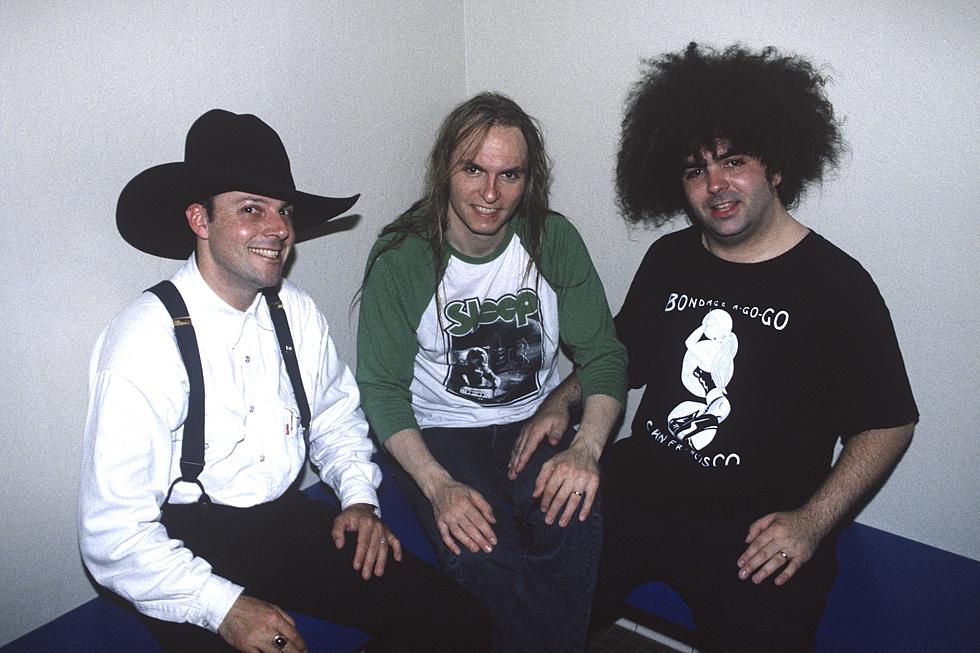
Buzz Osborne is often dismissive of Melvins' association to the grunge scene — especially because they'd relocated to California by the late '80s — but they had a profound influence on the sludgy, heavy sound that grunge came to be known for. Their fusion of metal and punk was accentuated with drop-D tuning and odd time signatures, showing younger bands that music could be heavy and quirky and progressive all at once.
Thayil told Loudwire in a 2021 interview that Osborne showed him and Green River's Mark Arm how to play guitar in drop-D tuning. After being comfortable with it, the Soundgarden guitarist showed the tuning to his bandmates, Chris Cornell and Hiro Yamamoto and they loved the way it sounded.
It eventually became a staple in Soundgarden's... sound!
Melvins, 'Echo/Don't Piece Me'
Green River

Green River were important to the foundation of grunge for a few different reasons. Firstly, they put out what's considered the debut grunge release in 1985, the EP Come on Down. Two years later they released their second EP Dry as a Bone through the fledgling Sub Pop Records, which was the label's very first non-compilation EP.
The set of songs was also what led to the birth of the term "grunge" when Sub Pop's Bruce Pavitt described the record as "ultra-loose grunge that destroyed the morals of a generation" in a promo.
And not only was Green River's distorted, energized sound essentially the sonic blueprint for grunge, but the group consisted of several key musicians that later went on to continue shaping the scene even after they broke up: Mark Arm and Steve Turner (Mudhoney), Bruce Fairweather (Mother Love Bone) and Jeff Ament and Stone Gossard (Mother Love Bone, Temple of the Dog, Pearl Jam).
Green River, 'Swallow My Pride'
Soundgarden

Thayil wasn't being smug by choosing his own band — Soundgarden really were vital to grunge's beginnings. Even when they were a three-piece band with Cornell singing behind the drums, the group's eccentric, psychedelic-infused sound caught the attention of other musicians and industry people in the Pacific Northwest alike.
Soundgarden, Melvins and Green River were among a group of bands that contributed music to the Deep Six compilation album released by C/Z Records in 1986, which served as a showcase of Seattle's upcoming local talent. It also featured Melvins, Green River, Skin Yard, the U-Men and Malfunkshun.
READ MORE: 5 Things We Learned From Kim Thayil's Memoir 'A Screaming Life'
Like Green River, Soundgarden put out some of the very first releases on Sub Pop: their 1987 single "Hunted Down / Nothing to Say" and the EP Screaming Life later that year. Soundgarden were also the first group from the scene to sign with a major label when they struck a deal with A&M Records in 1988.
By the time grunge became popularized in early 1992, Soundgarden already had three albums out (Ultramega OK, Louder Than Love and Badmotorfinger).
The U-Men

Having formed in 1980, the U-Men were the oldest of the grunge pioneers and, according to Thayil, they were also the biggest when the scene was first starting to take shape in Seattle. (For instance, the image above is from a public access recording from 1985, archived on the gabbatom YouTube channel.)
"Everyone liked them, they were influential and they had a pretty good following," the guitarist told us. "Eventually, it took a few years, but eventually Soundgarden, Green River and the Melvins all kind of caught up in [their] popularity."
The band essentially served as a bridge between early '80s punk and what grunge eventually morphed into later in the decade. They helped establish the unconventional sound that so many of the other Pacific Northwest bands adopted, combining elements from rock, punk and metal and thus attracting a more diverse array of fans to their shows.
They were the first group to be managed by Susan Silver, who later also managed Soundgarden (and married Cornell), Alice In Chains, Screaming Trees and a few others. Beyond their influence on the local scene, the U-Men also toured extensively around the U.S. during the '80s and helped spread the sound of grunge to other geographical locations years before the genre became popular.
The U-Men
Check out the history of grunge told in 13 albums below.
The History of Grunge Told in 13 Albums
Gallery Credit: Lauryn Schaffner

More From WGBF-FM


